
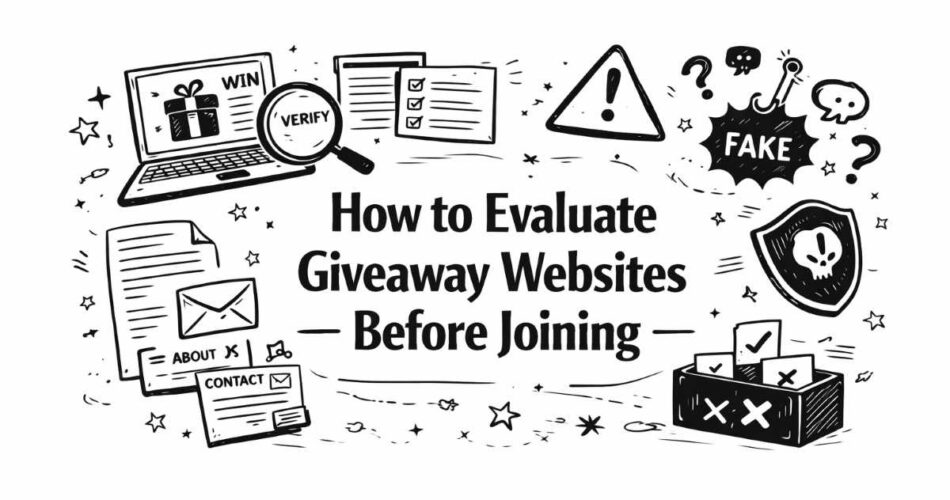
Giveaway websites can be convenient. They collect promotions in one place, promise easy entries, and make discovering new giveaways feel effortless. But convenience comes with a trade-off: not every giveaway website is trustworthy, and some exist primarily to collect data, drive low-quality traffic, or promote questionable campaigns.
Knowing how to evaluate a giveaway website before joining can help you avoid wasted time, protect your personal information, and focus only on platforms that operate responsibly. This guide walks you through what to look for, what to question, and when to walk away.
Why Not All Giveaway Websites Are Trustworthy
Anyone can build a website and list giveaways. There is no universal standard or certification that determines whether a giveaway site is legitimate.
Some sites are carefully curated, reviewing each giveaway before listing it. Others automatically scrape content or allow anyone to submit promotions without verification. In the worst cases, giveaway websites exist solely to redirect users to scam pages or collect emails with little transparency.
The problem is not giveaways themselves, but lack of accountability. When a website has no clear ownership, rules, or responsibility for what it promotes, users take on all the risk.
Key Indicators of a Legitimate Giveaway Website
Legitimate giveaway websites usually show consistency, clarity, and restraint.
One strong indicator is clear positioning. Trustworthy sites explain what they do, who they serve, and what type of giveaways they list. They do not promise guaranteed wins or exaggerated outcomes.
Another indicator is selectivity. A responsible giveaway site does not list everything it finds. It filters out obvious scams, low-quality campaigns, or giveaways that violate platform rules.
Legitimate sites also maintain updated content. Old, expired, or broken giveaway links are a sign of neglect and poor oversight.
Finally, tone matters. Websites that rely on hype, urgency, or unrealistic claims often prioritize clicks over user safety.
Transparency, Rules, and Contact Information
Transparency is one of the most reliable trust signals.
A reputable giveaway website usually provides:
- A clear “About” page explaining its purpose
- Terms of use or editorial guidelines
- A privacy policy explaining how user data is handled
- Contact information or a support channel
These elements show that the site expects to be accountable. Even if you never contact them, knowing that you could matters.
Transparency also extends to how giveaways are presented. Legitimate sites clarify whether they host giveaways themselves or simply link to third-party promotions. They do not pretend to control outcomes they do not manage.
How Rules and Disclaimers Protect Users
Responsible giveaway websites include disclaimers that set expectations.
Common examples include:
- Clarifying that the site does not run the giveaways
- Stating that eligibility and rules are determined by organizers
- Encouraging users to verify details independently
These statements are not signs of weakness. They are signs of honesty. Sites that avoid disclaimers often blur responsibility, which can leave users confused when things go wrong.
Rules and disclaimers show that a website understands the limits of its role and respects users enough to explain them.
Common Warning Signs to Avoid
Certain patterns should immediately raise caution.
Be careful with giveaway websites that:
- Guarantee winnings or “high success rates”
- Push aggressive pop-ups or forced sign-ups
- Require account creation before viewing giveaway details
- Lack any identifiable owner or contact information
- Redirect repeatedly through unfamiliar domains
Another warning sign is data imbalance. If a site demands your email, social login, or personal details before you can even see giveaway rules, the priority is likely data collection not user value.
Design quality alone is not proof of legitimacy. Even polished sites can hide questionable practices.
How Users Should Verify Information Independently
Even when a giveaway website looks trustworthy, independent verification is essential.
Start by clicking through to the original giveaway source. Check whether the organizer is real, active, and consistent across platforms.
Search for the brand or giveaway name separately. If nothing exists outside the listing site, that is a red flag.
Pay attention to details like deadlines, eligibility, and prize descriptions. Mismatches between the listing and the original source often signal poor curation.
Verification takes time, but skipping it transfers all risk to you.
Responsible Use of Giveaway Aggregator Websites
Giveaway websites are tools, not guarantees.
The safest approach is to treat them as discovery platforms, not authorities. Their role is to point you toward opportunities not to validate them for you completely.
Limit how much personal information you share, especially on third-party sites. Use a separate email address if possible, and avoid sites that pressure you to act quickly.
Remember that skipping a giveaway costs nothing. Joining the wrong one can cost far more.
Final Reminder About Responsible Participation
A good giveaway website helps users make informed choices. A bad one relies on distraction, urgency, or confusion.
Before joining any giveaway through a website, ask yourself:
- Who runs this site?
- How do they make money?
- What responsibility do they take for what they promote?
If those answers are unclear, trust that uncertainty.
Responsible participation starts with evaluation. When you slow down and assess before clicking “enter”, you stay in control no matter how tempting the prize looks.

