
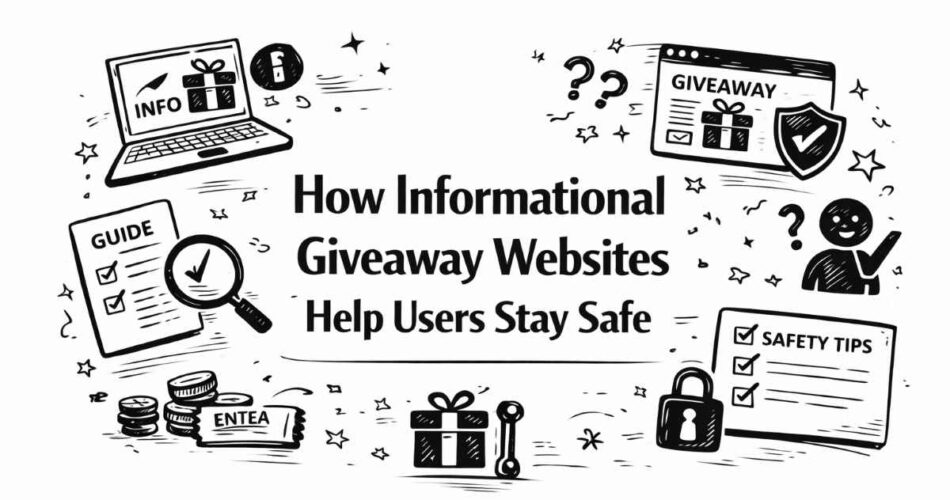
As online giveaways continue to grow in popularity, so does the number of platforms that list, promote, or discuss them. Among these platforms, there is an important distinction that many users overlook: the difference between giveaway organizers and informational giveaway websites.
Informational giveaway websites do not run giveaways themselves. Instead, they aim to help users understand, evaluate, and approach giveaways more safely. While they are not a guarantee against risk, these platforms play a valuable role in shaping a safer and more informed giveaway environment.
The Difference Between Organizers and Informational Sites
Giveaway organizers are the entities that create and run giveaways. They decide the rules, prizes, eligibility, timelines, and winner selection methods. Organizers can be brands, creators, companies, or projects promoting their products or services.
Informational giveaway websites, on the other hand, do not control giveaways. Their role is to collect, explain, and contextualize information. They may list active giveaways, publish educational guides, or share safety tips but they are not responsible for outcomes.
Understanding this difference is crucial. Confusing informational platforms with organizers can lead to misplaced trust or unrealistic expectations.
The Role of Curation in Reducing Risk
One of the most important contributions of informational giveaway websites is curation.
Instead of presenting every giveaway they find, responsible informational sites apply filters. They may exclude campaigns that show obvious red flags, lack basic transparency, or violate platform rules. This does not eliminate all risk, but it significantly reduces exposure to low-quality or suspicious promotions.
Curation saves users time. Rather than sorting through countless unreliable offers, users start with a narrowed selection that has already passed basic scrutiny.
Curation is not endorsement it is risk reduction.
Education as a Safety Tool
Beyond listing giveaways, informational websites help users by explaining how giveaways work.
Educational content may include:
- Guides on identifying scams
- Explanations of giveaway rules and eligibility
- Articles about common misconceptions
- Safety checklists for participation
This educational layer empowers users. Instead of blindly trusting promotions, users learn to ask better questions and make informed decisions.
Education shifts responsibility back to the user where it ultimately belongs while providing tools to make safer choices.
Why Independent Platforms Matter
Independence is one of the most important qualities of a trustworthy informational website.
Independent platforms are not owned or controlled by giveaway organizers. This separation allows them to:
- Speak honestly about risks
- Avoid promotional pressure
- Prioritize user education over conversions
When informational sites rely heavily on sponsorships or direct partnerships, objectivity can suffer. Independent platforms are more likely to highlight limitations, uncertainties, and user responsibilities.
Independence does not guarantee accuracy, but it increases the likelihood of balanced and transparent information.
Transparency and Trust Signals
Responsible informational giveaway websites are transparent about their own role.
They clearly state:
- That they do not run giveaways
- That they do not guarantee winnings
- That users must verify information independently
These disclosures protect users from misunderstanding the platform’s authority or responsibility. Transparency builds trust not by promising safety, but by clarifying boundaries.
A website that openly explains what it does not do is often more trustworthy than one that implies control it does not have.
The Limitations of Informational Giveaway Websites
Informational websites are helpful, but they are not foolproof.
They cannot:
- Prevent organizers from canceling giveaways
- Guarantee prize delivery
- Detect every scam or misleading campaign
- Replace user judgment
Even well-curated platforms rely on public information and external sources. Scams can evolve quickly, and legitimate giveaways can change without notice.
Recognizing these limitations prevents overreliance and reinforces the need for personal responsibility.
How Users Should Use Information Responsibly
The safest approach is to treat informational giveaway websites as starting points, not final authorities.
Users should:
- Click through to original sources
- Read official rules carefully
- Verify organizer identities independently
- Limit personal data sharing
- Avoid giveaways that feel unclear or rushed
Information is most powerful when combined with critical thinking. A responsible user does not outsource judgment entirely even to well-meaning platforms.
Balancing Trust and Skepticism
Informational websites exist to reduce confusion, not eliminate risk.
Healthy skepticism means:
- Questioning claims without assuming bad intent
- Understanding that not every failure is a scam
- Accepting uncertainty as part of online participation
When users balance trust with caution, informational platforms become effective allies rather than false safety nets.
Final Disclaimer
Informational giveaway websites help users stay safer by curating content, providing education, and encouraging transparency. However, they do not and cannot remove all risk.
Giveaway participation always involves choice. Informational platforms support better decisions, but responsibility ultimately rests with the user.
Safety comes not from guarantees, but from understanding.

