
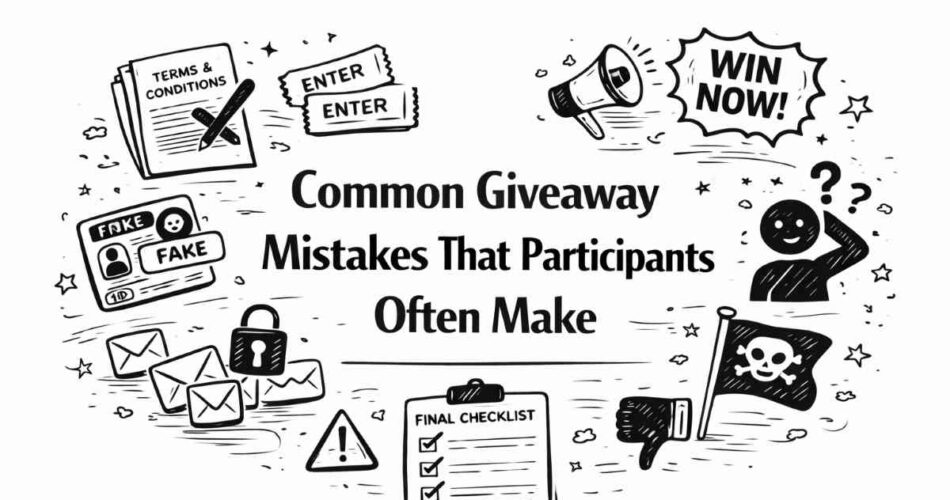
Online giveaways are designed to be easy. A few clicks, a short form, maybe a follow or a comment and you are in. Because the barrier to entry is low, many participants treat giveaways casually. Unfortunately, this casual approach is also why people make the same mistakes again and again.
Most giveaway frustrations do not come from scams or bad luck alone. They come from avoidable errors that quietly reduce eligibility, increase risk, or create unrealistic expectations. This article explores the most common giveaway mistakes participants make and how to approach giveaways more responsibly.
Ignoring Terms and Conditions
One of the most frequent mistakes is skipping the terms and conditions entirely.
Many participants assume giveaway rules are generic or unimportant. In reality, the rules determine whether your entry is valid at all. Eligibility, entry limits, deadlines, and winner selection methods are all defined there.
Common consequences of ignoring terms include:
- Entering despite being ineligible by age or location
- Missing required steps
- Violating entry limits unknowingly
- Assuming prizes or timelines that were never promised
You do not need to read every word in detail, but scanning key sections can prevent most misunderstandings. Ignoring the rules turns participation into guesswork.
Using Incorrect or Fake Information
Some participants use fake or incomplete information to enter giveaways, often to save time or protect privacy. While the intention may seem harmless, this mistake frequently backfires.
Incorrect information can result in:
- Automatic disqualification
- Inability to contact winners
- Prize forfeiture due to failed verification
Giveaway systems often verify email addresses, social accounts, or identities before distributing prizes. If the information does not match or cannot be confirmed, the entry may be removed without notice.
Using false details does not increase safety it usually eliminates any chance of winning.
Joining Too Many Giveaways at Once
Another common mistake is over-participation.
Because giveaways are easy to enter, some users join dozens or even hundreds of them without tracking what they entered, what rules apply, or who is running each campaign.
This behavior leads to:
- Missed winner notifications
- Forgotten entry requirements
- Confusion about legitimacy
- Increased exposure to low-quality promotions
Joining too many giveaways at once shifts participation from intentional to impulsive. Quantity replaces quality, and disappointment becomes more likely.
Selective participation is not about pessimism it is about control.
Falling for Misleading Promotions
Not all misleading giveaways are outright scams. Some use exaggerated language, unclear framing, or incomplete information to attract attention.
Common examples include:
- Implying guaranteed rewards without stating odds
- Highlighting prizes without explaining eligibility
- Using urgency to rush participation
- Mimicking the branding of known companies
When participants focus only on the prize and ignore context, they become vulnerable to confusion or risk. Misleading promotions thrive on speed and emotion.
Slowing down is the simplest defense.
Assuming Effort Equals Winning
Many participants believe that more effort leads to better chances.
They may:
- Write detailed comments
- Enter repeatedly across platforms
- Join every related promotion
In random-draw giveaways, effort does not translate into control. While some actions may increase entry count, they never guarantee results.
This misunderstanding creates frustration when outcomes do not match effort. Recognizing the role of chance helps prevent emotional overinvestment.
Sharing More Data Than Necessary
Another common mistake is oversharing personal information.
Some participants provide phone numbers, addresses, or sensitive details early in the process sometimes before winners are even selected. In many cases, this information is not required at that stage.
Responsible participation means:
- Sharing only what is necessary
- Delaying sensitive information until confirmation
- Avoiding giveaways that request excessive data
Data cannot be taken back once shared. Treat it as part of the cost of participation.
Not Verifying the Source
Participants often trust giveaways based on appearance alone.
A polished design or familiar logo does not guarantee legitimacy. Without verifying who runs the giveaway, participants risk joining poorly managed or misleading campaigns.
Verification does not need to be complex:
- Check official websites or profiles
- Look for consistent information
- Read past posts or announcements
A few seconds of verification can prevent hours of frustration later.
How to Participate More Responsibly
Avoiding mistakes does not require expertise just awareness.
Responsible participation means:
- Reading rules briefly but intentionally
- Using accurate information
- Joining selectively
- Managing expectations
- Walking away when something feels unclear
Giveaways should feel optional and low-stakes. When participation starts to feel stressful or confusing, it is time to pause.
Building Better Giveaway Habits
Good habits improve the experience even when you never win.
These habits include:
- Tracking giveaways you join
- Limiting how many you enter
- Treating losses as normal outcomes
- Valuing time and data as real costs
Over time, these habits reduce frustration and increase confidence in your decisions.
Summary
Most giveaway mistakes are not dramatic they are quiet, repetitive, and avoidable. Ignoring rules, oversharing data, joining too many giveaways, and trusting misleading promotions all reduce the quality of participation.
By slowing down and participating intentionally, you protect yourself and set realistic expectations. Giveaways are not promises. They are chances and how you approach them matters more than the outcome.

