
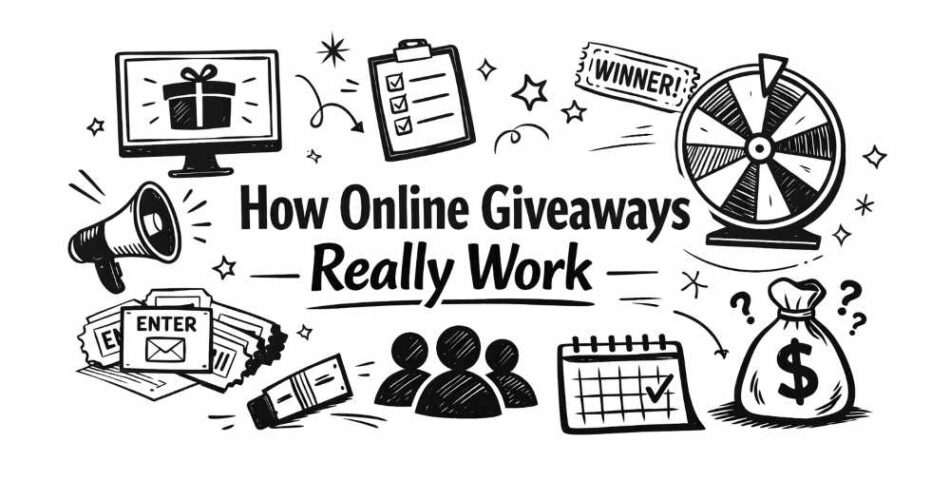
Online giveaways are everywhere. From social media feeds and brand websites to email newsletters and community forums, giveaways promise prizes in exchange for simple actions likes, comments, sign-ups, or referrals. For beginners, they can feel both exciting and confusing. Are giveaways legitimate? How do winners get chosen? And what really happens behind the scenes?
This guide breaks down how online giveaways actually work, without hype or false promises. If you’re new to giveaways or just want to understand them better, this article will help you set realistic expectations and participate more confidently.
What Is an Online Giveaway?
An online giveaway is a promotional campaign where a company, creator, or organization offers prizes to participants for free. In most cases, participants are not required to pay money to enter. Instead, they complete specific actions, known as “entries”, to qualify for a chance to win.
These giveaways can be hosted on websites, social media platforms, or dedicated giveaway tools. Prizes vary widely, from digital items and discount codes to physical products, gift cards, or event tickets.
At its core, a giveaway is an exchange: participants give attention, engagement, or data, and the organizer offers a chance to win a reward. Importantly, a chance to win does not mean a guarantee.
Common Giveaway Formats
Not all giveaways work the same way. Understanding the format helps you know what is expected and how winners are selected.
Social media giveaways are among the most popular. They often ask users to like a post, follow an account, comment, tag friends, or share content. These are easy to join and designed to increase visibility quickly.
Email or newsletter giveaways require participants to subscribe to a mailing list. The goal is usually long-term communication rather than short-term engagement.
Referral-based giveaways reward participants with additional entries when they invite others. These campaigns aim to grow an audience organically through word of mouth.
Website-hosted giveaways typically use forms or third-party tools. Participants may need to complete tasks such as visiting pages, answering questions, or verifying email addresses.
Instant-win or random-draw giveaways select winners randomly after the campaign ends, while skill-based giveaways may require participants to submit photos, stories, or creative work that is judged according to set criteria.
Why Companies Run Giveaways
Giveaways are not acts of generosity alone; they are marketing tools with clear objectives.
One common reason is brand awareness. A well-designed giveaway can introduce a brand to thousands of new people in a short time.
Another goal is audience growth. By encouraging follows, sign-ups, or referrals, companies build mailing lists and social media audiences they can reach later.
Giveaways are also used for product launches. Offering a new product as a prize creates early interest and conversation around it.
Finally, giveaways help with engagement and data collection. When users interact with content or fill out forms, brands gain insights into audience preferences and behavior.
From a business perspective, the prize is often a calculated marketing cost rather than a loss.
How Entries Are Counted
Entries are the actions that qualify someone to win. Each giveaway defines its own entry rules, and these rules matter.
Some giveaways allow one entry per person, while others offer multiple entries for completing additional actions. For example, signing up for a newsletter may count as one entry, while sharing the giveaway link might add another.
Most modern giveaways use automated systems or platforms to track entries. These tools help prevent duplicates, enforce rules, and randomly select winners later.
However, entries can be invalidated. Using fake accounts, providing incorrect information, or violating platform rules may disqualify a participant. This is one reason why some people believe giveaways are “rigged”, when in reality their entries simply did not qualify.
How Winners Are Selected
Winner selection depends entirely on the giveaway’s structure.
In random-draw giveaways, all valid entries are placed into a pool, and winners are chosen randomly. The odds depend on the number of participants and how many entries each person has.
In judged giveaways, winners are selected based on criteria such as creativity, originality, or relevance. These are not random and often involve subjective evaluation.
Some giveaways use a hybrid approach, where finalists are selected by judges and the final winner is chosen randomly or by public voting.
After selection, winners are usually contacted via email or direct message. Legitimate giveaways do not require winners to pay fees to claim prizes, although they may need to confirm identity or provide shipping details.
Common Myths About Giveaways
There are many misconceptions about online giveaways, especially among beginners.
One common myth is that giveaways are always scams. While scams exist, many giveaways are legitimate marketing campaigns run by real businesses.
Another myth is that only influencers or insiders win. In random-draw giveaways, every valid entry has a chance, regardless of who you are.
Some people believe that more entries guarantee a win. Extra entries can improve odds, but they never guarantee results.
There is also a misconception that giveaways are a reliable way to earn income or valuable items. In reality, giveaways should be treated as occasional opportunities, not expectations.
Final Thoughts & Realistic Expectations
Online giveaways can be fun, low-risk ways to discover new brands and occasionally win prizes. However, they work best when approached with realistic expectations.
You are trading attention and engagement for a chance not a promise of a reward. Understanding how giveaways are structured, why companies run them, and how winners are selected helps you avoid disappointment and spot red flags.
If you choose to participate, read the rules carefully, protect your personal information, and never feel pressured to take actions you’re uncomfortable with. When viewed as entertainment rather than a strategy for guaranteed rewards, online giveaways can be a positive experience.

