
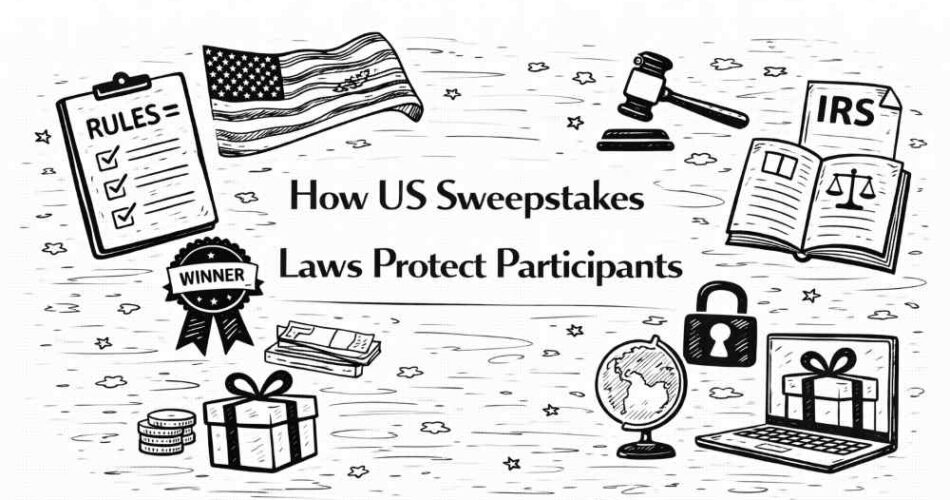
Sweepstakes promotions are widely used by brands across the United States to promote products, engage customers, and build brand awareness. From social media campaigns to nationwide promotions, sweepstakes have become a common marketing strategy.
However, many participants may not realize that sweepstakes are regulated by specific laws designed to protect consumers.
Understanding how U.S. sweepstakes laws work can help participants recognize legitimate promotions and avoid misleading ones.
Disclaimer: This article is for informational purposes only and does not constitute legal advice.
What Are Sweepstakes Under US Law?
In the United States, sweepstakes are promotional giveaways where winners are selected randomly.
Participants enter the promotion for a chance to win a prize, and winners are typically chosen through a random drawing.
Sweepstakes differ from contests, where winners are selected based on skill or judging criteria.
They also differ from lotteries, which are typically government-regulated games involving payment to enter.
The Three Elements of an Illegal Lottery
U.S. law identifies three elements that define a lottery:
- Prize
- Chance
- Consideration (payment)
If a promotion includes all three elements, it may be considered an illegal lottery.
To remain legal, sweepstakes remove the payment requirement and allow free entry.
The “No Purchase Necessary” Rule
One of the most recognizable elements of legal sweepstakes is the phrase:
“No Purchase Necessary.”
This rule ensures that participants can enter without buying a product or paying a fee.
The purpose of this requirement is to prevent companies from operating private lotteries while still allowing promotional giveaways.
By providing a free method of entry, brands comply with legal standards while giving participants a fair opportunity to win.
Official Rules and Transparency Requirements
Legitimate sweepstakes must provide clear official rules.
These rules typically include:
- Eligibility requirements
- Entry instructions
- Prize descriptions
- Prize value
- Promotion dates
- Winner selection process
- Sponsor identification
These disclosures allow participants to understand how the promotion operates.
For more information on eligibility restrictions, see our article on State Restrictions for Online Giveaways.
Consumer Protection Regulations
Several regulatory bodies help ensure sweepstakes operate fairly.
The Federal Trade Commission (FTC) enforces consumer protection laws related to advertising and promotions.
Companies must avoid misleading claims about:
- Prize availability
- Odds of winning
- Entry requirements
If promotions are deceptive or fraudulent, enforcement agencies may take legal action.
State-Level Sweepstakes Protections
In addition to federal oversight, state laws may impose additional requirements.
Some states require registration for high-value sweepstakes.
For example:
- Florida
- New York
These states may require sponsors to register promotions or provide bonding for large prizes.
State laws help ensure transparency and protect consumers from misleading promotions.
How Participants Benefit From These Laws
Sweepstakes regulations exist primarily to protect participants.
These laws help ensure that promotions:
- Provide clear rules
- Identify legitimate sponsors
- Offer fair entry opportunities
- Use transparent winner selection processes
By establishing these standards, the law helps prevent scams and misleading advertising.
Tips for Identifying Compliant Sweepstakes
Participants can identify legitimate promotions by looking for:
- Official rules pages
- Clearly identified sponsors
- “No Purchase Necessary” statements
- Transparent prize descriptions
- Realistic promotional claims
If a giveaway requires payment or lacks clear rules, participants should exercise caution.
You can also read our guide on How to Spot Fake Online Giveaways in the US.
Conclusion
Sweepstakes laws in the United States are designed to protect participants and ensure promotions are conducted fairly.
By requiring transparency, free entry options, and clear disclosures, these regulations help maintain trust between brands and consumers.
Participants who understand these legal protections are better equipped to recognize legitimate promotions and avoid potential scams.
📌 FAQs
Yes. Sweepstakes are legal when they remove the payment requirement and comply with applicable laws.
This statement ensures the promotion does not become an illegal lottery that requires payment for entry.
Both federal agencies such as the Federal Trade Commission (FTC) and individual state authorities oversee sweepstakes promotions.
Misleading promotions may violate consumer protection laws. Legitimate sweepstakes provide clear rules and disclosures.
Participants should review official rules, verify the sponsor, and confirm that entry does not require payment.

