
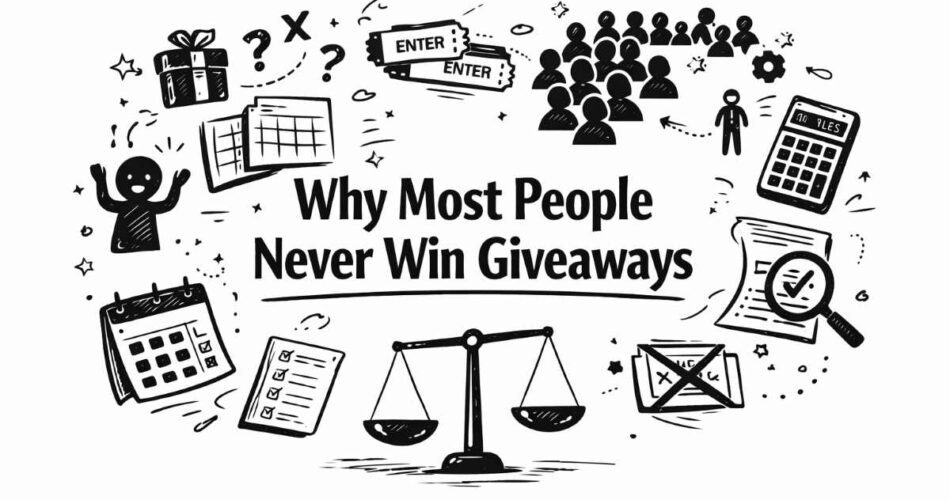
If you have ever joined multiple online giveaways without winning a single prize, you are not alone. Many participants start to feel discouraged, suspicious, or even frustrated after repeated losses. Some assume giveaways are unfair, rigged, or only designed for “certain people”.
In reality, not winning giveaways is completely normal and often expected. Understanding how giveaways work from a probability and participation perspective can help explain why most people never win, and why that outcome does not mean something went wrong.
Understanding Probability in Giveaways
At the heart of every giveaway is probability. Whether a winner is chosen randomly or through a judging process, the odds are rarely in favor of individual participants.
In a simple random giveaway with one prize, each valid entry represents one chance among many. If there are 10,000 entries, your probability of winning with a single entry is 1 in 10,000. Even with multiple entries, the odds usually remain very small.
Human intuition often struggles with probability. Many people overestimate their chances after entering several giveaways, forgetting that each giveaway is a separate event with its own odds. Losing repeatedly does not mean you are “due” for a win it simply reflects how probability works.
Number of Participants vs Winners
One of the biggest reasons most people never win giveaways is the imbalance between participants and winners.
Online giveaways scale extremely well. A campaign can attract thousands or even millions of participants in a short time, especially when hosted on social media. However, the number of prizes rarely increases at the same rate.
Most giveaways offer:
- One main winner
- A small number of secondary prizes
- Sometimes only a single reward overall
This creates a situation where the majority of participants are guaranteed to lose, no matter how legitimate or well-run the giveaway is. When you understand that giveaways are designed for mass participation but limited rewards, the outcome becomes much less personal.
Entry Rules and Disqualifications
Another overlooked factor is disqualification. Many participants assume that entering automatically means being eligible, but this is not always the case.
Common reasons entries are disqualified include:
- Using duplicate or fake accounts
- Failing to meet eligibility requirements (age, location, platform rules)
- Missing required steps
- Entering after the deadline
- Violating platform or giveaway terms
In large giveaways, automated systems remove invalid entries before winners are selected. This can lead to disappointment for users who believed they had entered correctly but did not fully follow the rules.
This does not mean giveaways are unfair it means rules are enforced, often silently and automatically.
Misconceptions About “Winning Strategies”
Many online discussions promote so-called “giveaway hacks” or guaranteed strategies. While some tips can improve organization or efficiency, most claims are misleading.
There is no strategy that guarantees winning a random giveaway. Adding more entries can slightly improve odds, but it never changes the fundamental probability enough to ensure success.
Common misconceptions include:
- Believing frequent participation leads to inevitable wins
- Assuming certain accounts are favored
- Thinking timing or comment wording influences random draws
- Believing organizers secretly choose winners based on engagement value
In legitimate random giveaways, winners are selected by automated tools or unbiased processes. Overestimating control often leads to unnecessary frustration.
The Emotional Side of Losing Giveaways
Repeated losses can quietly affect motivation and trust. Some participants feel embarrassed, unlucky, or convinced that giveaways are pointless.
This emotional response is natural. Humans are wired to seek patterns and fairness, even in systems based on chance. When outcomes feel unfair, people look for hidden explanations even when none exist.
Recognizing that losing is the default outcome for most participants can help reframe expectations. Giveaways are not a reflection of your worth, effort, or intelligence. They are statistical events with limited winners.
Developing a Healthy Mindset When Joining Giveaways
A healthy mindset is essential for enjoying giveaways without frustration.
First, treat giveaways as optional entertainment, not opportunities you depend on. The moment expectations become too high, disappointment becomes inevitable.
Second, focus on low-effort participation. If a giveaway requires excessive time, data, or emotional investment, ask yourself whether the potential reward is worth it.
Third, celebrate participation, not outcomes. Discovering new brands, content, or communities can be a small benefit even without winning.
Finally, set boundaries. If joining giveaways starts to feel stressful or discouraging, it is perfectly fine to step back.
Conclusion
Most people never win giveaways and that is exactly how giveaways are designed to work. Limited prizes, massive participation, probability, and strict rules naturally lead to far more losers than winners.
Understanding this reality helps remove suspicion, frustration, and unrealistic expectations. When approached with the right mindset, giveaways can remain fun, harmless, and occasionally rewarding experiences rather than sources of disappointment.
Winning is rare. Losing is normal. And knowing the difference makes all the difference.

